Some people “teach” because it’s their job. Others teach because it’s their dharma, their very nature. This is particularly, and peculiarly, true of being a “philosopher,” certainly for me.
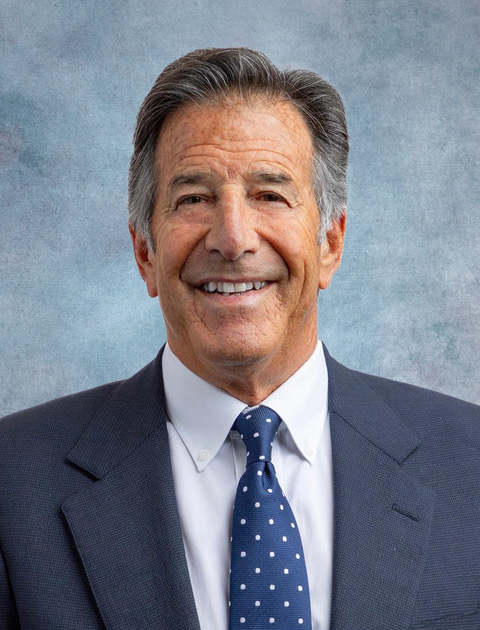
Professor Robert Hahn
Robert A. Hahn (born 25 August 1952 in New York City) is Professor Emeritus of Philosophy at Southern Illinois University Carbondale. His research centers on ancient philosophy and the history of ancient science—cosmology, astronomy, mathematics—and is distinguished by his efforts to “situate” the early philosophers in their historical, cultural, and, most importantly, technological contexts. This emphasis on reviewing the Greek philosophers in context led to special studies that shed new light on the origins of philosophy in Greece through appeals to techniques in stone architecture in the monumental temples of archaic Ionia, in numbers and proportions, in archaeological artifacts and reports, and in ancient mathematics—Greek, Egyptian, and Babylonian.
Hahn graduated from Union College with his B.A. with Honors in Philosophy in 1973, summa cum laude, Phi Beta Kappa. He was named the Archibald Scholar as Valedictorian in the College of Liberal Arts and was awarded the Larabee Prize in Philosophy. During his undergraduate years, he also studied Sanskrit at the University of Chicago, considering a career path in Indo-European studies. Hahn began his first year of graduate studies at the University of California at Berkeley. The next year, he was offered a full scholarship and stipend at Yale University, where he went on to earn three degrees: M.A. in Philosophy (1975), M.Phil. in Philosophy (1975), and Ph.D. in Philosophy (1976). Hahn’s dissertation was entitled “Did Plato ‘Schematize’ the Forms: Structure, Value, and Time, in the Later Dialectical Dialogues,” directed by Karsten Harries and joined in committee by Robert S. Brumbaugh and Heinrich von Staden. At Yale, Hahn was awarded the Mary Cady Tew Prize in Philosophy for the ranking first-year graduate student, and the Jacob Cooper Prize in Greek Philosophy for an earlier draft of what became his dissertation.
After graduation, Hahn worked with Gregory Vlastos, who had just left Princeton to become the Mills Professor of Philosophy at the University of California at Berkeley in the fall of 1976, followed by an appointment back at Yale to be a Lecturer in Philosophy. Subsequently, Hahn was appointed to his first tenure-track position at the Arlington branch of the University of Texas, but left the next year for a three-year appointment jointly at Brandeis University in the Department of Philosophy and the History of Ideas, and jointly at Harvard University (in the Division of Continuing Education). At Brandeis, Hahn created the Boston Area Colloquium for Ancient Philosophy that is still functioning after more than forty years. Moreover, he was selected to be Visiting Professor of Philosophy at the American College of Greece (January to August 1980), where his lifelong embrace of Greece began. The Harvard program gave him the opportunity to teach philosophy, mostly to older adults, which proved pivotal in his development of a unique Study Abroad program called Ancient Legacies (what does the ancient world still have to teach us?) that brought together undergraduates, graduate students, parents and grandparents, families, and senior citizens. Hahn brought the two paths together to create a unique interdisciplinary, team-taught, travel study program featuring hands-on learning activities.
In Greece, participants discussed the Olympic Games and ran a short Olympic footrace in an ancient stadium; they studied vases and votives in the museums and then had an exercise at a local pottery workshop to try to produce similar forms; in an ancient bouleuterion they recreated the trial of Socrates from a translation of Plato’s Apology that Hahn and his staff produced; they learned to make seasonal sundials on the beach as part of an introduction to ancient astronomy; and they performed an ancient play in an ancient theater with costumes and masks they made themselves.
In Egypt, participants reconstructed models of the Great Pyramid out of sugar cubes to test three theories of pyramid construction; they erected a breakable obelisk to explore whether the ancient Egyptians made scale models; they learned how to produce tomb paintings using the red-grid techniques; and every year they recreated a mummification ritual thanks to the cooperation of one of the students in the group.
The Ancient Legacies program that began at Brandeis/Harvard continued for forty years at Southern Illinois University. When Hahn brought the program to an end in June 2023, he had personally led 67 different 1/2 month programs to Greece, Greece & Turkey, and to Egypt. The program enrolled more than 1,200 participants.
In 2017, Hahn published what might well be his most important study that brought together his skills in ancient mathematics, engineering, and cosmic speculation: The Metaphysics of the Pythagorean Theorem: Thales, Pythagoras, Engineering, Diagrams, and the Construction of the Cosmos out of Right Triangles. In effect, despite the doubts that have become endemic about whether Pythagoras had anything to do with the famous theorem that bears his name, Hahn argues, by following the diagrams connected with ancient reports, that Thales plausibly knew an interpretation of the so-called “Pythagorean theorem.” The argument rests on archaeological evidence, ancient Egyptian mathematics, Euclidean geometry, and the evidence we have of developments in geometry that preceded him and later were preserved by Plato in the Timaeus. Most remarkable is Hahn’s argument that the lines of thought by which the evidence suggests Thales ruminated—following the diagrams—turned out to have a metaphysical meaning seen in the context of Aristotle’s testimony that the earliest philosophers imagined an underlying substance that altered without changing. Thales identified it as water, and Hahn suggests geometry revealed its structure in the right triangle.
Hahn’s success as a teacher has been acknowledged by three awards: Outstanding Teacher of the College, Teaching Excellence Award, and Outstanding Teacher of the University. Having routinely taught the large lecture courses in Ethics and in formal Logic, it is a fair estimate that Hahn taught more than 40,000 students in more than 350 courses, supervised more than 450 teaching assistants, and sat on dozens of committees for M.A. and Ph.D. students, including dissertations that he directed.
After a 42 year career at Southern Illinois University Carbondale, Hahn retired on January 1, 2025 with the title of Professor Emeritus of Philosophy, honoring his decades of scholarship, teaching, and innovation in ancient studies.
Prof. Hahn came out of retirement in 2026 when he was hired by Yale University to teach Ancient Philosophy in the Alumni College.
 Professor Robert Hahn